Find Luminous Antique Style Wall Clock for Home, Office, and Hotel
Source 30 luminous antique style wall clock options from verified manufacturers in Fujian, China. Buyers can compare features like digital movement, alarm functions, and customization for residential, commercial, and hospitality applications.
Key considerations
Products List




Comprehensive Sourcing Guide
Strategic Sourcing Guide for Luminous Antique Style Wall Clocks
Procuring wall clocks that combine specific aesthetic requirements with functional illumination presents a unique set of challenges for B2B buyers. The intersection of "luminous" capabilities and "antique" styling demands a rigorous evaluation of product attributes, supply chain reliability, and technical specifications. This guide provides a disciplined framework for sourcing these items, relying strictly on observed market data and verified product characteristics to ensure procurement decisions are grounded in factual evidence rather than speculative marketing claims.
Defining Product Attributes and Technical Specifications
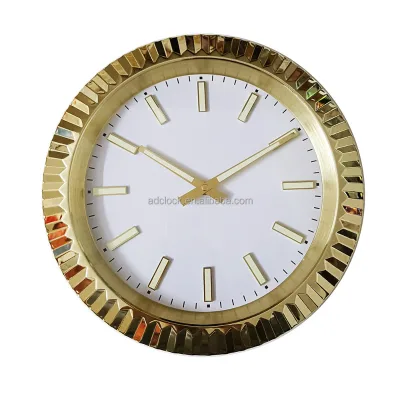
The foundation of a successful sourcing strategy lies in the precise definition of product attributes. For the specific keyword "luminous antique style wall clock," the market data reveals a distinct set of characteristics that define the available inventory. The physical form factor is predominantly circular, with a specific subset of models also available in square configurations. The primary construction material is metal, providing the structural integrity required for wall mounting, while surface materials vary, with plastic and glass options observed in the current catalog.
The aesthetic requirement of "antique" style is a confirmed attribute for several models, often paired with a "simple" style variant. Crucially, the luminous feature is a verified capability, distinguishing these timepieces from standard analog clocks. The movement mechanisms are diverse, with observations confirming the presence of sweep movements, step movements, quartz movements, and digital movements. This variety suggests that buyers must carefully align the movement type with their specific operational needs, as a sweep movement offers a different auditory experience compared to the distinct ticking of a step movement.
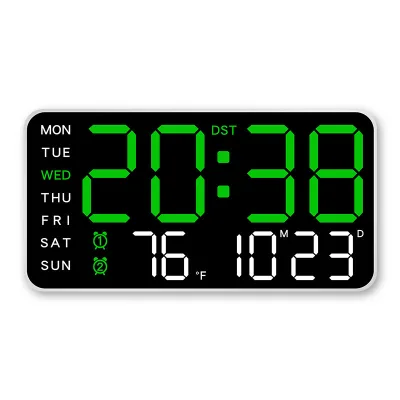
Power sources also vary significantly across the product range. Some units operate on mechanical power, while others rely on battery power or external power supplies. For digital variants, the power specification indicates an electric input with a voltage range of 110-240V, suggesting broad compatibility with international electrical standards. The display patterns for digital models include LED digital formats, specifically 4-digit 7-segment large LED digits, with red LED colors being a common observation. Dial colors are observed in white and black, and the customization options allow for "any color" requests, provided the order volume meets the minimum threshold.
Compliance, Certification, and Safety Standards
When sourcing electrical and mechanical devices, compliance with safety standards is paramount. The available data indicates that the products originate from Fujian, China, a region with established manufacturing capabilities for consumer electronics and home decor. While specific certification documents like CE are mentioned in background contexts, buyers must verify the actual certification status for each specific order. It is critical to understand that the presence of a certification mention in general background data does not guarantee that every listed SKU possesses that specific certification.
Buyers should request valid test reports and certification documents directly from the supplier for the specific model numbers being considered, such as the Novelty Metal Wall Clock-064Q or the JN EA18384. For models with external power supplies, verifying the voltage compatibility and insulation standards is essential to ensure safety in the destination market. The standard packaging often includes master cartons with specific dimensions, such as 604243cm or 512329cm, which can impact shipping compliance and storage requirements.
Furthermore, the "customized" standard noted in the product data implies that the manufacturing process may be adapted to meet specific buyer requirements. However, this customization must not compromise safety compliance. Buyers should explicitly confirm that any customizations, including logo placement or color changes, do not alter the electrical safety ratings or mechanical integrity of the device. The absence of explicit, universally applied certification data in the core product facts necessitates a proactive verification process where the buyer requests proof of compliance for the specific batch being purchased.
Cost Drivers and Pricing Dynamics
The pricing structure for luminous antique style wall clocks is influenced by several key variables. The observed price range in the market spans from 1.03 USD to 60.5 USD, indicating a wide disparity in value propositions. This variance is likely driven by the complexity of the movement mechanism, the materials used for the casing and surface, and the level of customization required. Models featuring digital movements, LED displays, and external power supplies generally command higher price points compared to basic mechanical or battery-operated analog units.
Minimum Order Quantity (MOQ) is a significant cost driver. The data shows an MOQ range of 10 to 5000 units, with a specific high-confidence fact noting an MOQ of 500 pieces for certain product lines. This threshold directly impacts the unit cost; orders meeting the 500-piece threshold may benefit from economies of scale, whereas smaller orders may incur higher per-unit costs. Buyers must balance their inventory needs against the MOQ to optimize cash flow and storage costs.
Additional cost factors include packaging requirements. Standard packaging involves PP bags, while more premium options include white window boxes with shrink wrap. The specification of "4PCS Per C" or "2PCS Per C" in master cartons affects the density of the shipment and, consequently, the freight cost. Customization of logos and colors, while available, may introduce setup fees or require higher order volumes to be economically viable. The "customized" standard also suggests that non-standard packaging or specific carton dimensions could incur additional charges.
Typical Applications and Market Segmentation
The versatility of these clocks allows them to serve a broad range of applications. The "antique" style combined with "luminous" features makes them particularly suitable for hospitality environments, such as hotels, restaurants, and bars, where ambient lighting is often dim, and the time must be visible without harsh illumination. The availability of both analog and digital movements allows buyers to match the clock to the specific ambiance of the venue; a sweep movement might be preferred in a luxury setting for its quiet operation, while a digital LED model might be ideal for a modern lounge or a facility requiring precise timekeeping.
In residential settings, these clocks can serve as statement pieces in living rooms or hallways. The circular and square shapes, along with the metal construction, offer durability and aesthetic appeal. The "simple" style variant may appeal to buyers looking for a more understated look, while the "antique" style caters to traditional decor preferences. The customization options, including logo placement, make these clocks attractive for corporate gifting or promotional campaigns, where branding is a key objective.
The "luminous" feature is particularly valuable in educational institutions, hospitals, and public spaces where visibility is critical during power outages or in low-light corridors. The battery-operated models offer flexibility in installation, as they do not require proximity to an electrical outlet, whereas the external power supply models provide continuous operation without the need for battery replacement.
Supplier Evaluation and Verification
Selecting the right supplier requires a meticulous evaluation process based on verifiable data points. Buyers should prioritize suppliers who can demonstrate a consistent track record with the specific product models mentioned, such as the Novelty Metal Wall Clock-064Q or the JDL-1100A. The ability to accept OEM orders and provide customized logos is a critical capability for B2B buyers, and this should be confirmed in writing before placing an order.
The origin of the products, specifically Fujian, China, should be verified through the supplier's business license and export documentation. Buyers should assess the supplier's capacity to handle the required order volume, given the wide MOQ range. A supplier capable of fulfilling orders from 10 units up to 5000 units offers greater flexibility, but the buyer must ensure that the quality remains consistent across different order sizes.
Communication regarding the "customized" standard is essential. Buyers should clarify what specific customizations are feasible without compromising the product's integrity. The supplier's ability to provide detailed product specifications, including the exact movement type, power source, and material composition, is a strong indicator of their professionalism. Additionally, the packaging specifications, such as the master carton dimensions and the inclusion of shrink wrap, should be clearly defined to avoid logistical issues upon delivery.
Quality Control and Long-Term Procurement Considerations
Quality control is the cornerstone of a sustainable procurement relationship. Given the diverse range of movements and power sources, buyers should implement a rigorous inspection protocol. This includes verifying the luminous functionality, ensuring the movement operates smoothly without excessive noise, and checking the durability of the metal casing and surface materials. For digital models, testing the LED display for brightness and color consistency is necessary.
Long-term procurement considerations involve establishing a reliable supply chain that can adapt to changing market demands. The availability of customization options allows buyers to refresh their product lines without significant retooling costs. However, maintaining consistency in quality across different batches is crucial. Buyers should request samples from different production runs to verify that the "best" quality claim is consistently met.
The packaging standards, such as the use of white window boxes and master cartons, play a vital role in protecting the product during transit. Buyers should ensure that the packaging is robust enough to prevent damage, especially for glass-surfaced models. Furthermore, the lead time and production capacity should be discussed in detail to ensure that the supplier can meet delivery deadlines, particularly for large orders that may require significant production time.
Conclusion
Sourcing luminous antique style wall clocks requires a balanced approach that considers technical specifications, compliance, cost, and supplier reliability. The market offers a wide array of options, from mechanical sweep movements to digital LED displays, each with its own set of advantages and requirements. By adhering to the verified facts provided and conducting thorough due diligence, buyers can make informed decisions that align with their specific business needs. The key to success lies in clear communication, rigorous quality control, and a strategic approach to managing the variables of customization and order volume.
FAQs
What movement types are available for these clocks?
Available movement types include sweep, step, quartz, and digital mechanisms. Buyers must verify the specific movement for each model, as options range from mechanical sweep to digital LED displays depending on the product line.
Can I customize the logo and color of the clock?
Yes, customization for logos and colors is available for orders meeting the minimum threshold. The standard allows for any color requests, but specific customization details must be confirmed with the supplier before production begins.
What is the minimum order quantity for these products?
The minimum order quantity ranges from 10 to 5000 units depending on the specific product line. A high-confidence fact notes a standard MOQ of 500 pieces for certain models, which directly impacts unit pricing and cost efficiency.
Which power sources do these wall clocks support?
Power sources vary and include mechanical, battery, and external electric supply options. Digital models specifically require an electric input with a voltage range of 110-240V, while others may operate on battery power for flexibility.
Where are these clocks manufactured and what is the origin?
The products originate from Fujian, China, a region with established manufacturing capabilities. Buyers should verify the specific factory location and export documentation to ensure the product meets their sourcing and compliance requirements.
What materials are used for the clock casing and surface?
The primary construction material is metal, while surface materials include plastic and glass options. These materials provide structural integrity and aesthetic variety, with the specific surface type varying by model and design style.
How are the clocks packaged for shipping?
Packaging options include PP bags, white window boxes with shrink wrap, and master cartons. Specific carton dimensions vary by model, such as 60*42*43cm, and must be confirmed to ensure safe transit and storage compliance.